Showing posts with label Brain. Show all posts

Thursday, 10 December 2015

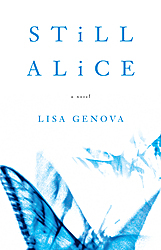
Still Alice by Lisa Genova

2153405
from goodreads
5 stars

Have you ever felt that there are so many books and so little time? My to read list keeps growing and growing. With so many interesting books being published ever day, plus the books that are already published that I haven't discovered yet, it seems like I will never read everything that I would like.

This past year I made a list of books I would like to read. I only have two left on my list, so I made it through. While it was a good method to get some books done, it felt a bit constricting because there were some other books that caught my eye and I wasn't sure if I should go for those books or keep to the list. Thanks to some awesome reading months, where I got so much done, I was usually able to do both. But not always.

This year I have decided not to have a set reading list. Instead I have a list of suggestions where if I don't know what to read I can read something from that list. I'm not going to feel rushed to read those books but I will never be stuck with the question what to read next. I'll see how that goes.

Synopsis

Alice is a cognitive psychology professor at Harvard. She has built a successful career and is a sought out lecturer. But when words start to go missing and she gets lost in areas of town she knows very well, she knows something else is going on, early onset Alzheimer's.

My Thoughts

What a simple, elegant, breathtaking story. I ended up reading it in a day. I could not put it down.

I thought it refreshing to see the disease of Alzheimer's from the perspective of the patient. I think it illuminates many aspects and deficiencies in the support for patients and the differences in opinions, limited trials and slow diagnosis that sometimes occur.

I liked how it showed how those with Alzheimer's get frustrated too. While sometimes they don't remember and so things aren't a big deal, there are times when they are lucid and know that something is not right, or want to have a say but not sure how to say it. Yes, it is frustrating for the caregivers too, but sometimes when we give people labels it is easier to take away what little humanity and dignity they have left by just doing everything for them, even decision making.

I really loved seeing the different relationships in Alice's life. Her disease brought her closer to one daughter, and really, closer to her family in general, as she is realizing that family is the most important thing, not the accolades of the world.

The relationship with her husband was at times hard to watch. Here is a man, who's work is everything to him. Yes, he loves his wife and family, but he feels that his work in cancer research is what he needs to focus everything on. When he stops having time to run with her because of his lab I wanted to slap in on the head. Pass the torch man, there are times and places for things and it was sad, yet understandable how he was putting his work first and wife second as that was his way of dealing with the devastating prognosis.

While I'm sure there is poetic liscense and it might not be 100% accurate for what the patients with Alzheimer's think and feel, I think this is a great book to help get rid of the stigma of Alzheimer's, especially the early onset of it, and to increase our empathy for those living with it and those in their family.

The only drawback to the book is that now any memory slip or lost word I have makes me think I have early onset Alzheimer's. I am a lot more paranoid about it now. Maybe that is a good thing?

Thursday, 16 July 2015

The Maze Runner Trilogy by James Dashner

17292676
from goodreads
2.5 stars

I really love goodreads.com. I love the fact that I can see what my friends are reading. I love that I can keep track of books I want to read, even though every time I go on I seem to add a billion! I love their reading challenge. I love being able to see what others think of books and with the ratings it helps to gauge whether the book is worth the time to read or not.

Yet, that rating system can be a bit of a bad thing, especially when it comes to YA books. It seems that most of the people who rate YA books either a) rate it before the book is even out. Like seriously? The book hasn't been published but people are all ready giving it a 5 star rating because of their anticipation??? Crazibus! or b) are so super enthusiastic about it that I believe they give an inflated rating. It seems with YA readers (of a certain age, that age being young) that there is no grey area when it comes to a series. Either they love it full tilt to the end or they don't, and most of them love it! And you know what, there is nothing wrong with readers being super excited about a series or about reading in general. It's great! I just wished they didn't saturate the ratings so I could get a more realistic view of a book. Oh well.

***spoiler alert*** while I will do my very best not to have spoilers I may inadvertantly give something away. If you have not read this series yet and don't want anything revealed you may want to wait to read this review. 

Synopsis

Thomas wakes up in a dark elevator. He doesn't remember anything. Thus starts this sci-fi ride within a maze and then beyond.

My Thoughts

I read this series because of the hype, especially the added hype around the movies. I especially wanted to see what my teenage niece was so excited about. 

While the idea behind the series is really cool and thought provoking, I found myself being utterly bored while reading the books. While I guess there were some exciting bits in them they were surrounded by boring dialogue and characters that I really didn't care for at all. Perhaps if I were more of a brooding teenager I would have appreciated the teen attitude and recklessness. Alas, I am a 32 year old mother and I found the macho vibrato so ridiculous.

In the first book I was definitely disliking the not answering of questions. Thomas just arrived there obviously needing some answers to where the heck he was and all he got was "you don't need to know right now" or "we'll tell you later", yet later never seemed to happen and when would he need to know? And then the people got mad when he explored or tested some boundary he shouldn't have. It's like hello!? maybe answer his questions and then he would not have done that!

I did like the slang that the gladers made up. It definitely helped this rowdy bunch of boys not swear, otherwise swearing would have been littered throughout this series, and I really detest swearing for swearing sake in books.

In the second and third book I did not like Thomas' anger towards Teresa. I felt that the intensity of the anger was really not warranted. It was also weird in the last books how close he was to his two friends from the glade considering he only knew them for like a week or so. How did he become all chummy and leadery with them. Wouldn't of these other people have other friends in the group? It was just weird.

This series I think would be good for teens that usually don't feel like reading. There is not a bunch of flowery mumbo jumbo in it and there are some cool fight scenes. But, if you are looking for a completed, relatively well thought out and understandable world (sort of like the one created in the Hunger Games) you aren't going to find it. There were too many holes and things happening that I just didn't get. I guess I had too many questions that weren't answered.

So all in all, this was a series that just wasn't for me. I only read the second and third book because I held hope it would get better and I wanted to see how the writer was actually going to wrap it all up. (I was satisfied with the ending though I know many weren't). While the concept was good, the execution, for me, was not excellent.

The author does have some other series that look interesting. I may give them a try, but I think I need to wait before I do.

Thursday, 2 July 2015

The Autistic Brain: Thinking Across the Spectrum by Temple Grandin and Richard Panek

16056498
from goodreads
4 stars

I think in today's society autism has touched everyone. Whether you personally know someone or your favourite celebrity is talking about it.

The first book I read about someone who was on the spectrum was Born on a Blue Day by Daniel Tammet. It was a mind opening experience for me. You get a first person glance into how his brain works and processes things. While I am definitely not an expert on savants or autism now, it helped me have a greater understanding, respect and empathy for those on the spectrum who are trying to make sense of our crazy world.

While I don't have daily interactions with people on the spectrum I know a few people who do. I can't even begin to understand their love, frustration, and other range of emotions that they go through everyday. I am grateful for books like this and others that help shed more light and knowledge on the autism spectrum. Hopefully with more knowledge out there a greater understanding, patience and kindness will occur.

Synopsis

Temple Grandin, a high functioning autistic adult, looks at the brain make up of people with autism and examines how advances in brain research shed new light onto the complexities of autism.

My Thoughts

This was a really fascinating read. While at times it could get quite technical with some of the science, it was interesting to see some of the comparisons between the autistic brain and the "standard" brain.

Austism is very complex. Often it manifests itself different ways. Quite often no two brain scans of people with autism look alike making it hard to have a blanket treatment. The possibilites of advancing brain scans have in enabling a more personalized treatment is very exciting.

It was interesting how she explores and shows that autism is not a manifestation of something "deficient" or "wrong" in the mind but how it really has to do with how the brain is working. It really is about the brain. She is so optimistic and excited about learning more about the brain and then finding out what strengths come from this difference in wiring of the brain.

I love how she doesn't focus on the label, but more on what the person enjoys and is capable of. We are all capable of something great no matter our "labels". I think we are a little to eager to label people and use that label as a crux of why we or they can't do something, or why we can't live and explore. Yes, labels are helpful if we are using them to figure out different techniques to help an individual navigate the world to be successful. They are not helpful it they are used to segregate or allow people not to experience the world.

This really is a must read.